A Coalition of Labor and Community Members Rises to Ensure That Bay Area Transit Finally Gets the Stable, Steadfast Funding It Deserves
This guest column was co-written by Richard Marcantonio, managing attorney and head of transportation advocacy at SF law firm Public Advocates; and Alex Lantsberg, research and advocacy director for the SF Electrical Construction Industry, the labor management cooperation committee of IBEW Local 6 and the SF Electrical Contractors Association.
Twice in the past six months, Bay Area leaders failed to move forward two regional revenue initiatives: an affordable housing bond and a measure to fund the region’s public transportation and related needs. In both cases, the labor movement missed the opportunity to demonstrate to the broader public that workers’ interests mirror the interests of the community.
As SF Building Trades Council Secretary-Treasurer Rudy Gonzalez wrote in his June “Building the Trades” column in this newspaper, “Voters won’t pull the lever for such measures unless they hear a strong coalition arguing in favor of them and see a comprehensive policy vision laid out in the ballot language.”
That strong labor and community coalition is now coming together with a policy vision for a 2026 transportation ballot measure.
What’s at Stake for Labor and the Community
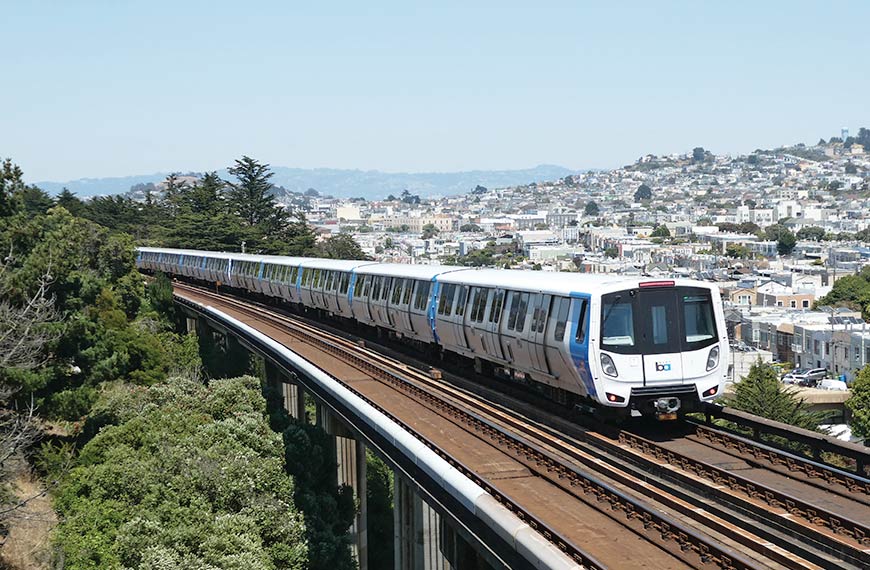
Transit offers an array of advantages. It’s far safer than driving. It’s more accessible to lower-income workers. It reduces traffic for those who must drive. It’s central to growing the economy while achieving our climate goals.
For these reasons and more, transit is essential to all of us — whether or not we use it ourselves.
The Covid pandemic made life much worse for transit workers and riders alike. Emergency federal and state funding that kept transit running will begin to dry up in 2026. In his June column, Gonzalez was direct about the consequences that inevitably fall on those of us working in the trades.
“Everyone is impacted if transit fails,” he wrote. “There’s no question that we need to fund public transit if we expect our own downtown to recover.”
To avoid major cuts to service and building trades jobs alike, we need a sustainable, dedicated source of operations funding. The solution is a nine-county ballot measure in 2026 that can raise at least $1.5 billion a year to run transit and make our roads safer. Similar legislative efforts failed earlier this year due to a civic climate dominated by political and corporate elites.
Now, labor and the community are leading this charge. Our future depends on it.
A Growing Coalition Is Forging Ahead
The coalition, which includes both transit and building trades unions alongside community supporters, came together around a set of principles that will ensure the transit-funding measure does three things: sustains and improves Bay Area transit; supports safe and dignified working conditions and jobs for transit and tradespeople alike; and overcomes opposition to 2024’s failed bill.
Sustaining and improving Bay Area transit requires adequate resources. The coalition envisions a nine-county measure that will raise at least $1.5 billion a year. That’s enough to ensure that BART, Muni, and every other Bay Area transit agency has the operations funding it needs and that additional funds are available for critical infrastructure, such as fixing potholes.
Also important is the question of who should pay.
Corporations are insisting on a sales tax that would mainly fall on working-class families that already shoulder some of the highest sales tax rates in California. The coalition, however, insists on progressive taxation. Measures that ask the wealthiest among us to pay a bit more, like a payroll tax on large employers, must remain on the table.
Labor standards are a linchpin of this coalition. Transit jobs must be good jobs. The workers who maintain and operate our transit systems, who build transit facilities, and who rely on transit systems understand that job quality and fair wages are crucial to keeping these systems resilient, fully staffed, and able to serve the public.
Finally, the measure must overcome the opposition that doomed Senate Bill 1031. (More on that shortly.) This requires consensus within labor and with transit agencies, counties, and lawmakers on how funds are distributed and spent, and on accountability.
These principles will prepare us to defend working-class and community interests against those of the corporate class and to move forward together in solidarity with the power to win in both the California Legislature in 2025 and at the ballot box in 2026.
The Path to the Ballot
Before the measure can go on the 2026 ballot, the state legislature must authorize it in a bill in 2025. Earlier this year, a bill to authorize the measure, SB 1031 (authored by Sen. Scott Wiener and Sen. Aisha Wahab), failed due to a lack of consensus.
In an effort to build consensus for a 2025 bill, the Bay Area’s Metropolitan Transportation Commission (MTC), the nine-county regional agency, has convened a “select committee” of MTC commissioners and labor and rider representatives to try to forge a regional consensus. We’re asking unions and community organizations to sign on to the principles to show our unity to the MTC and Bay Area legislators during this critical time in the development of the bill for 2025.
To learn more about our push for principled transit funding and to add your name or labor organization to our growing list of supporters, scan or click the QR code below.